Maria Street supportive housing in Acton
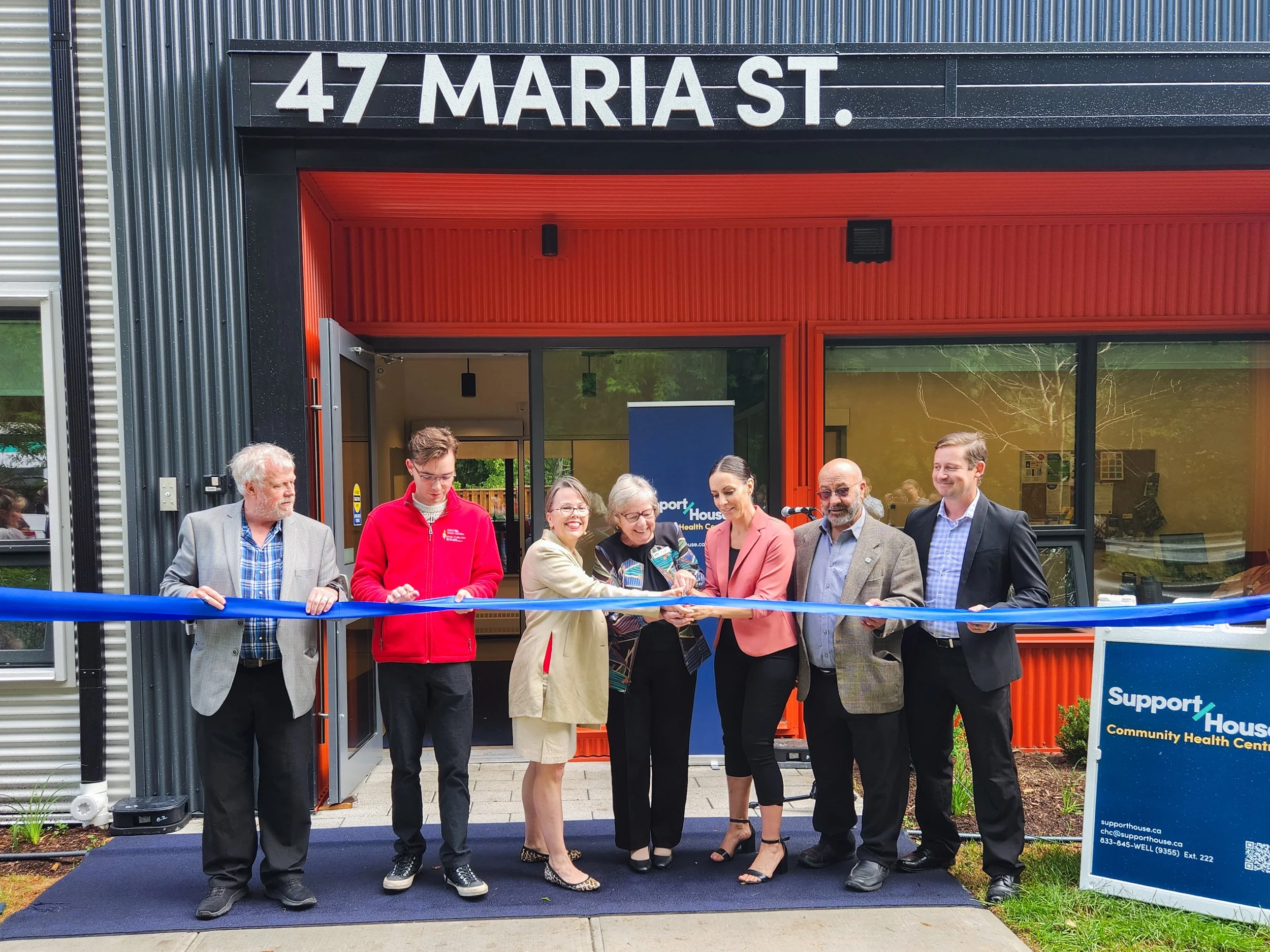
A new 12-bedroom building brings safe housing, on-site supports, and primary care to Halton.
When the doors opened at 47 Maria Street in Acton this month, they did more than welcome 12 new residents. They made a statement about the kind of community Halton wants to be — one where a safe home and the care to stay well aren't privileges, but the starting point for everyone.
The new supportive housing building, opened by our member agency Support House, is a fully accessible, two-storey, 12-bedroom home that pairs housing with on-site services and access to interprofessional primary care. It was built for people who too often fall through the cracks: those experiencing housing instability, mental health and substance use concerns, and dual diagnosis. Shared community and program space sits alongside the bedrooms, so residents can connect with one another and with the supports they need without leaving the building. It is, in short, the low-barrier, housing-first model we believe in — housing first, with care attached.
"Everyone has the right to housing and healthcare," says Christina Jabalee, Executive Director of Support House. It's a line she returns to often, and it's worth taking seriously, because the alternative is one we're all already paying for.
Here's the part that should end the debate about whether supportive housing is "affordable." It is the affordable option. The Canadian Mental Health Association has found that providing supportive housing costs roughly $613 per person each month. A shelter bed costs about $2,100 a month — more than three times as much. A hospital bed costs about $13,500 a month — more than twenty times as much. When we fail to house people, we don't save money. We spend far more of it, in the most expensive and least humane places possible.
That math is the case for Maria Street, and we're grateful it was made. Halton Region invested $3.94 million in the project, and the federal government added $2 million through Reaching Home: Canada's Homelessness Strategy. As Regional Chair Gary Carr put it, the opening "demonstrates the meaningful impact we can achieve when we work together." Kristina Tesser Derksen, Member of Parliament for Milton East–Halton Hills South, framed it in terms of neighbours: more people in Halton Hills will now have "both a foundation of stable housing and the wraparound services that support stability, wellness, and community connection." Mayor Ann Lawlor welcomed the building to Acton as a sign that the town is "stronger and more compassionate" when every resident has somewhere safe to call home.
Projects like this don't succeed because of any single agency or any single cheque. They succeed because housing, primary care, and mental health and addictions support are stitched together into one pathway, rather than left for people in crisis to navigate alone. That stitching is the work of the Mental Health + Addictions Alliance. Across our six member agencies — Support House, CMHA-Halton, ADAPT, Summit Housing & Outreach Programs, HOPE Place Centres, and STRIDE — we represent a $32.7-million footprint in Halton, more than 122,000 agency visits, and nearly 14,000 people served. Maria Street is what that footprint looks like when it touches the ground: 12 doors, and behind each one, a system that finally works the way it should.
The need in Halton is still greater than the supply, and one building won't change that on its own. But it changes everything for the people who will live there. As Jabalee says, supportive housing is about more than a roof — it "promotes dignity, respect and social inclusion." That's not a soft benefit. It's the whole point. Everyone has the right to housing and healthcare. In Acton, twelve more people are about to find out what that right feels like.